What are Brand Insights and how to find them


Brand insights refer to the deep understanding of a brand's audience, market position, competitive landscape, and overall perception. These insights are crucial for developing effective marketing strategies, refining brand messaging, and staying ahead in the market. Here's a comprehensive guide on how to find brand insights:
- Define Your Brand Goals: Before diving into insights, clarify your brand's objectives. Understand what you want to achieve, whether it's increasing brand awareness, driving sales, or improving brand perception.
- Audience Research: Start by understanding your target audience. Conduct demographic research to identify age, gender, location, income level, and other relevant factors. Use tools like surveys, interviews, social media analytics, and customer feedback to gather insights into their preferences, behaviors, and pain points.
- Competitive Analysis: Analyze your competitors to understand their strengths, weaknesses, strategies, and market positioning. Identify gaps in the market that your brand can fill and areas where you can differentiate yourself.
- Brand Perception Surveys: Conduct surveys or focus groups to gauge how your brand is perceived by customers, both current and potential. Ask questions about brand awareness, associations, trust, and loyalty. Analyze sentiment through social media monitoring and online reviews.
- Customer Journey Mapping: Map out the customer journey from awareness to purchase and beyond. Identify touchpoints where customers interact with your brand and analyze their experiences at each stage. This helps in identifying pain points and areas for improvement.
- Data Analysis: Utilize data analytics tools to gather quantitative insights into customer behavior, website traffic, conversion rates, and other key metrics. Analyze trends and patterns to understand what drives engagement and conversion.
- Brand Tracking: Implement brand tracking studies to monitor changes in brand perception over time. Track key metrics such as brand awareness, consideration, preference, and loyalty. Compare your performance against competitors to identify areas of improvement.
- Social Listening: Monitor social media channels, forums, and review sites to understand what people are saying about your brand and industry. Pay attention to both positive and negative feedback, and identify trends and emerging topics.
- Internal Stakeholder Interviews: Interview employees, stakeholders, and partners to gain internal perspectives on the brand. Understand their insights, experiences, and suggestions for improving brand perception and performance.
- Synthesize Insights: Once you've gathered various sources of insights, synthesize them into meaningful findings. Identify recurring themes, patterns, and opportunities for action.
- Develop Actionable Strategies: Based on the insights gathered, develop actionable strategies to strengthen your brand's position in the market. This could involve refining messaging, optimizing customer experiences, launching new products or services, or adjusting pricing and distribution strategies.
- Iterate and Evolve: Brand insights are not static; they evolve over time. Continuously monitor and analyze market trends, customer feedback, and competitive dynamics to adapt your strategies and stay relevant.
Types of Brand Insights:
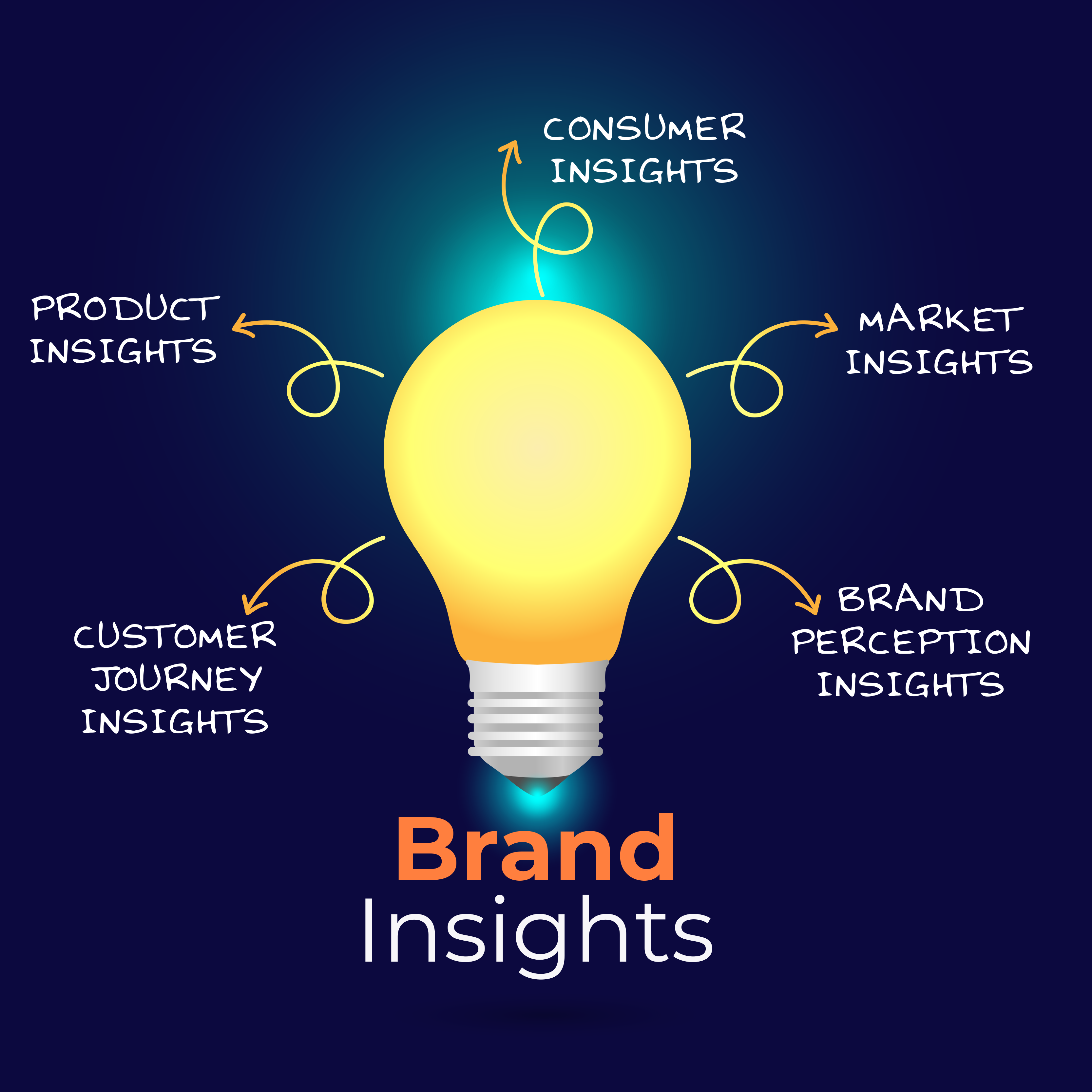
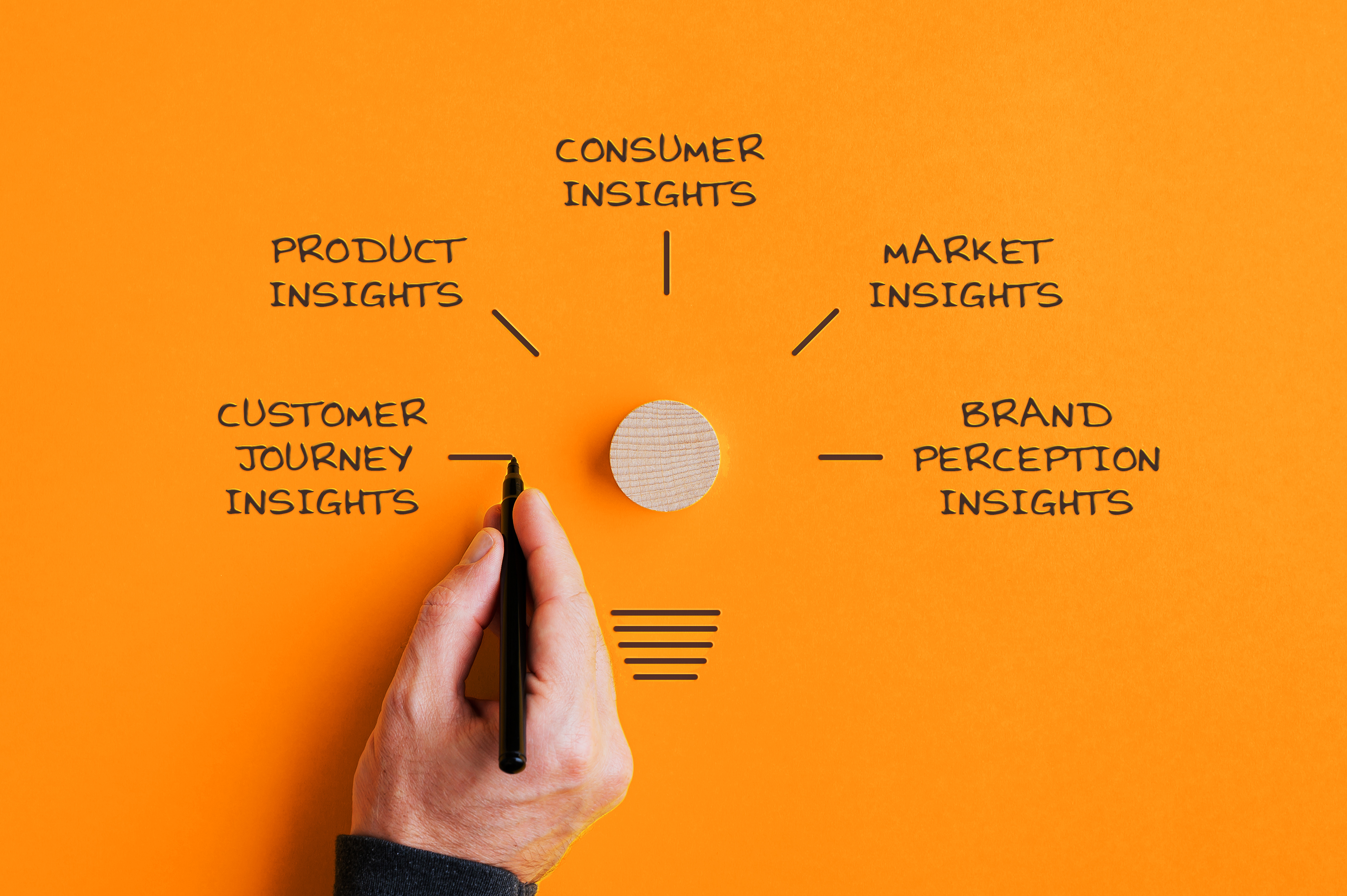
1- Consumer Insights:
- Demographic Information: Understanding the demographics of your target audience, including age, gender, income, education, etc.
- Psychographic Profiles: Exploring the values, attitudes, interests, and lifestyles of your audience.
- Behavioral Insights: Analyzing consumer behavior such as purchase habits, online interactions, and product usage patterns.
2- Market Insights:
- Competitive Analysis: Evaluating competitors' strategies, strengths, weaknesses, and market positioning.
- Industry Trends: Identifying emerging trends, market shifts, and disruptive technologies that may impact your brand.
- Market Segmentation: Dividing the market into distinct segments based on factors such as needs, preferences, and buying behaviors.
3- Brand Perception Insights:
- Brand Awareness: Measuring the level of awareness and recognition your brand enjoys among consumers.
- Brand Associations: Understanding the associations and perceptions consumers have with your brand, products, and messaging.
- Brand Loyalty: Assessing the level of loyalty and advocacy among your customer base.
4- Customer Journey Insights:
- Touchpoint Analysis: Mapping out the various touchpoints where customers interact with your brand and evaluating their experiences.
- Pain Point Identification: Identifying friction points and areas of dissatisfaction in the customer journey.
- Conversion Funnel Analysis: Analyzing the stages of the customer journey from awareness to purchase and beyond.
5- Product Insights:
- Product Usage Patterns: Understanding how consumers use your products or services and identifying opportunities for improvement.
- Feature Preferences: Gathering feedback on product features, functionalities, and user experience.
- New Product Opportunities: Identifying unmet needs and gaps in the market that your brand can address through innovation.
Conclusion:
Unveiling the power of brand insights requires a multifaceted approach that combines quantitative and qualitative research methods, data analytics, and market intelligence tools. By understanding your audience, market dynamics, and brand perception, you can develop strategies that resonate with consumers, differentiate your brand, and drive long-term success.